
Canadian Aviation Regulations Part IX w/ Free Cheat Sheet
These days, all across Canada, from BC to Ontario, Drones are everywhere, from hobbyists flying for fun to professionals capturing cinematic shots, surveying land, or inspecting infrastructure. But here at home in Canada, drones are not just toys.
Unmanned aerial vehicles, including drones, are regulated as aircraft under the Canadian Aviation Regulations (CARs). Understanding these Canadian drone laws and regulations is essential for every pilot who wants to fly safely and legally.
This blog will walk you through:
- What the CARs are
- How Part IX applies to remotely piloted aircraft systems (RPAS)
- What rules drone pilots MUST follow
- The difference between Basic and Advanced operations
- Common areas that are overlooked or misunderstood
- What to expect on the Transport Canada exams
Let’s get into it
What Are the Canadian Aviation Regulations (CARs)?
The Canadian Aviation Regulations (CARs) are the federal aviation laws governing all aircraft operations in Canada. They were first enacted in 1996 and provide the legal framework for:
- Aircraft certification
- Airspace rules
- Flight operations
- Licensing and training
- Safety requirements
The CARs are broken into multiple parts, each covering specific areas of aviation. Among these parts, Part IX — Remotely Piloted Aircraft Systems (RPAS) is the section dedicated to drones.
In other words:
If you are flying a drone in Canada, the rules you must follow are primarily in CARs Part IX.
Other parts of the CARs still apply (e.g., general safety obligations), but Part IX is the primary section that focuses on drones.
What Does “RPAS” Mean?
In the CARs, drones are referred to as Remotely Piloted Aircraft Systems (RPAS) — a term that encompasses:
- The aircraft itself
- The control station (remote controller)
- The command and control links (the data/video links)
- Any ancillary equipment or payloads
This broader definition matters because CARs Part IX includes rules that govern not just the physical craft but the entire system required to operate it.
When Did Part IX Come Into Force?
Part IX was introduced as the first comprehensive set of drone regulations in Canada and came into effect on June 1, 2019. Transport Canada
Before then, drone regulation in Canada was fragmented and piecemeal. Part IX modernized the regulatory environment by:
- Focusing on aircraft mass and operation, rather than recreational vs. commercial use
- Introducing pilot certification requirements for most drones
- Requiring registration and marking of drones
- Clarifying operating rules depending on environment and risk
How Part IX Applies to Drone Operations
Weight Categories Covered
Part IX primarily applies to drones weighing **250 grams up to and including 25 kilograms when flown within visual line of sight (VLOS). Transport Canada
Here’s how different weight classes are treated:
Under 250g (Micro drones)
- No registration and no pilot certificate required
- Still must be flown safely and not endanger aviation or people (CAR 900.06)
- All other parts of the CARs may still apply as they relate to aviation safety
250g – 25kg (Small RPAS)
- Subject to Part IX rules
- Must be registered and marked
- Pilot must hold a valid pilot certificate (Basic or Advanced)
Above 25kg (Medium RPAS)
- Newer 2025 rule changes extend Part IX to cover up to 150kg for certain operations (e.g., advanced, BVLOS) www.gazette.gc.ca
In essence:
If your drone weighs 250g or more and you are flying it, Part IX applies to you. Transport Canada

Key Parts of Part IX Explained
Let’s break down the key elements you need to understand.
Registration and Marking
Under Part IX, all small RPAS (250g – 25kg) must be:
- Registered with Transport Canada
- Marked with a registration number before flight
Exceptions only apply to micro drones (<250g).
This mandate ensures accountability and traceability of drones in Canada, especially when incidents occur.
Pilot Certification Requirements
Part IX requires that anyone operating a small RPAS must hold a valid drone pilot certificate issued by Transport Canada.
There are two levels:
Basic Operations Certificate
- For lower-risk flights
- Written exam only
Advanced Operations Certificate
- Allows more complex missions
- Written exam + flight review required
Every pilot, whether recreational or commercial, must certify through one of these pathways — Part IX removed the distinction between commercial vs. recreational drones. Transport Canada
Operating Rules (Basic vs Advanced)
Part IX sets two broad categories of operations with different rules:
Basic Operations
A drone flight is considered “Basic” when:
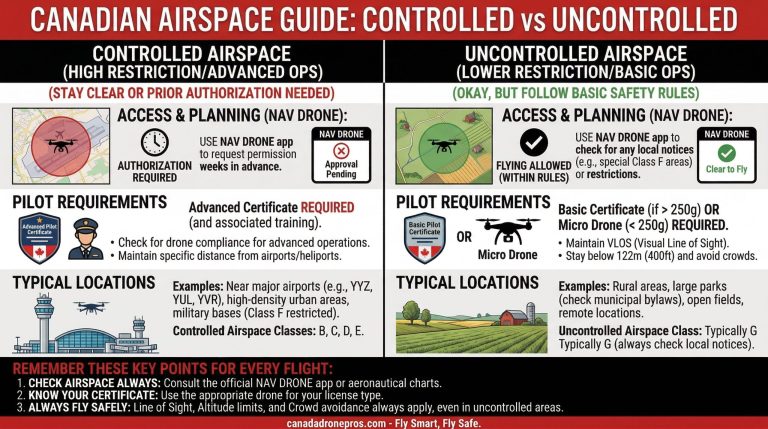
- The drone is flown in uncontrolled airspace
- It remains at least 30 meters horizontally away from people
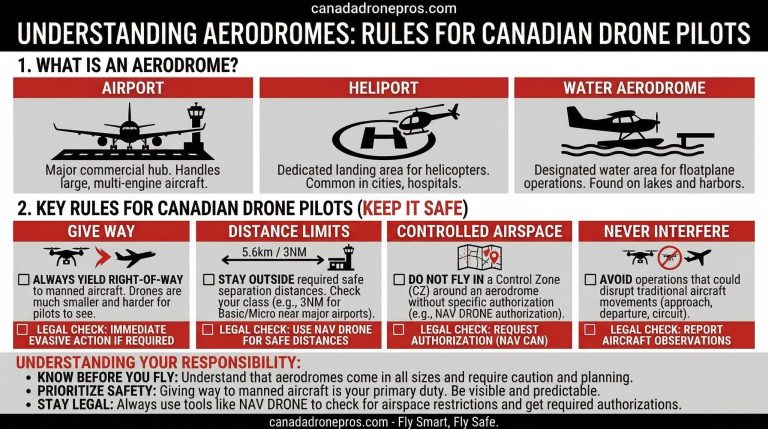
- It stays out of controlled airspace and well clear of airports/heliports
Basic operations are simpler environments and carry fewer operational privileges.
Advanced Operations
A flight is “Advanced” when it takes place:
- Near people (closer than 30m, as close as 5m horizontally)
- In controlled airspace (e.g., Class C, D, E)
- Near airports/heliports
- Over people (under certain conditions)
For advanced operations, pilots must meet higher knowledge criteria, pass both the exam and a flight review, and may require additional permissions from NAV CANADA.
Special Flight Operations Certificates (SFOCs)
If a flight doesn’t fit into Basic or Advanced (for example: Beyond Visual Line of Sight — BVLOS), a Special Flight Operations Certificate (SFOC) is required.
This is typically for:
- BVLOS flights
- Very large drones
- Operations that present unusual risk
- Flights beyond standard VLOS envelopes
Core Regulatory Obligations Under Part IX
Here are the most important legal obligations for drone pilots under Part IX:
Keep Your Drone in Visual Line of Sight
A drone pilot must always maintain direct visual contact with their drone; artificial visual aids like binoculars aren’t acceptable.
Avoid Other Aircraft and Emergency Sites
Drones must not interfere with manned aircraft, wildfire operations, or emergency scenes.
Respect Controlled Airspace
Without advanced permissions and the correct pilot certificate, drones cannot be operated within controlled airspace — controlled airspace is where larger aircraft operate and typically surrounds major airports. Mondaq
Maintain Standard Altitude Limits
Unless otherwise authorized, drones must remain below 400 feet Above Ground Level (AGL). Transport Canada
Follow the General Duty of Care
Part IX has an overarching requirement that all drone operations must not endanger aviation safety or the safety of a person or property on the ground.
This is enforced through both Part IX and the wider CARs (e.g., CAR 900.06).
What Rules Are Often Overlooked?
Even experienced pilots sometimes miss key regulatory points. Here are some of the most commonly overlooked aspects of Part IX:
7.1 Micro Drones (<250g) Are Not Fully Exempt
Many people think drones under 250g are completely unregulated. That’s not true.
While micro drones don’t need registration or a pilot certificate, they are still RPAS — and therefore drones that must be flown safely under general aviation safety obligations found elsewhere in the CARs.
- For example:
- You must still not fly recklessly
- You must avoid other aircraft
- You must respect NOTAMs and emergency restrictions
Then rule 900.06 applies to all RPA including micro drones.
Keep Certification With You On Every Flight
Part IX requires you to have your certificate with you — printed or electronic — whenever you fly.
This is enforceable during compliance inspections.
Flight Logs and Maintenance Logs
You are required to maintain flight logs and maintenance records for your drone. Keeping these up-to-date is a regulatory obligation.
Elimination of Recreational/Commercial Distinction
The days of “I don’t need a certificate because it’s recreational” are over. Part IX applies to every pilot the same, regardless of purpose.
Transport Canada Drone Exams: What’s On Them?
To meet the Part IX certification requirements, you must pass one of two exams:
Basic Operations Exam
To earn a Basic Operations Pilot Certificate, you must pass the “Remotely Piloted Aircraft Systems – Basic Operations” exam. Check out ours here.
Requirements:
Minimum score required ~65%
Online exam via the Transport Canada Drone Management Portal
Topics typically include:
- Definitions and terms in Part IX
- Principles of safe flight and operations
- Basic airspace knowledge
- Regulations for basic flights
- Risk management and safe flying practice
Advanced Operations Exam + Flight Review
For an Advanced Operations Pilot Certificate you must:
- Pass the advanced exam (minimum ~80%). Check out our pre course here.
- Complete an in-person flight review Transport Canada
The flight review evaluates your:
- Site survey planning
- Pre-flight checks
- Emergency procedures knowledge
- Ability to fly with visual reference and GCS
- Landing and control skills
Topics on the advanced exam include:
- Complex airspace
- Controlled vs uncontrolled airspace
- Proximity to people and structures
- Procedures for authorization
- Operational planning in controlled environments
Preparing for the Exams
We offer complete Transport Canada RPAS Certification training and preparation courses with everything you will need to pass your basic or advanced RPAS certification exam
These courses outlines everything from:
- Aviation law basics
- Meteorology fundamentals
- Air traffic procedures
- RPAS performance and systems
- Risk and human factors
They provide the explicit knowledge areas the exams are based on (and is the source material for those tests).
How Part IX Is Evolving (2025 and Beyond)
Canada is expanding the drone regulatory framework under Part IX to include:
- Extended VLOS (EVLOS)
- Sheltered VLOS
- Level 1 Complex BVLOS certification
- Medium drones up to 150kg under certain conditions
These changes will introduce:
- New pilot certification layers
- More complex operational frameworks
- Technical declaration requirements for manufacturers
- Expanded BVLOS permission pathways
This signals that drone operations in Canada are becoming increasingly integrated into the broader air transportation system.
Why Part IX Matters (Beyond Compliance)
Understanding Part IX is crucial not just to avoid fines, but to:
- Fly safely in shared airspace
- Avoid collisions with manned aircraft
- Operate near people and controlled airspace
- Expand your operational capabilities (controlled airspace, tighter distances, etc.)
- Comply with evolving regulations for BVLOS and advanced operations
Common Myths — Debunked
Myth: “Recreational drone pilots don’t need a certificate.”
False — Part IX applies to everyone flying an RPAS ≥250g.
Myth: “Micro drones don’t have to follow any rules”
False — micro drones still must be flown in a safe, non-endangering manner under aviation safety obligations.
Myth: “Certification only matters near airports”
False — certification levels affect how close you can fly to people, controlled airspace, and structures too.
Summary: The Big Picture of Part IX
Canadian Aviation Regulations Part IX:
- Defines RPAS as aircraft and integrates drones into aviation law
- Requires registration and pilot certification
- Eliminates distinctions between recreational and commercial
- Introduces Basic and Advanced operational categories
- Establishes safety obligations, distance, and airspace rules
- Sets the foundation for future complex and BVLOS operations
Final Thoughts
Part IX of the CARs is the legal backbone of drone operations in Canada. Whether you fly casually or professionally, understanding these regulations protects your safety and helps you stay within the law.
If you haven’t read Part IX in full yet, it’s strongly recommended — and necessary before your next flight.
Free Canadian Aviation Regulations Part IX Cheat Sheet
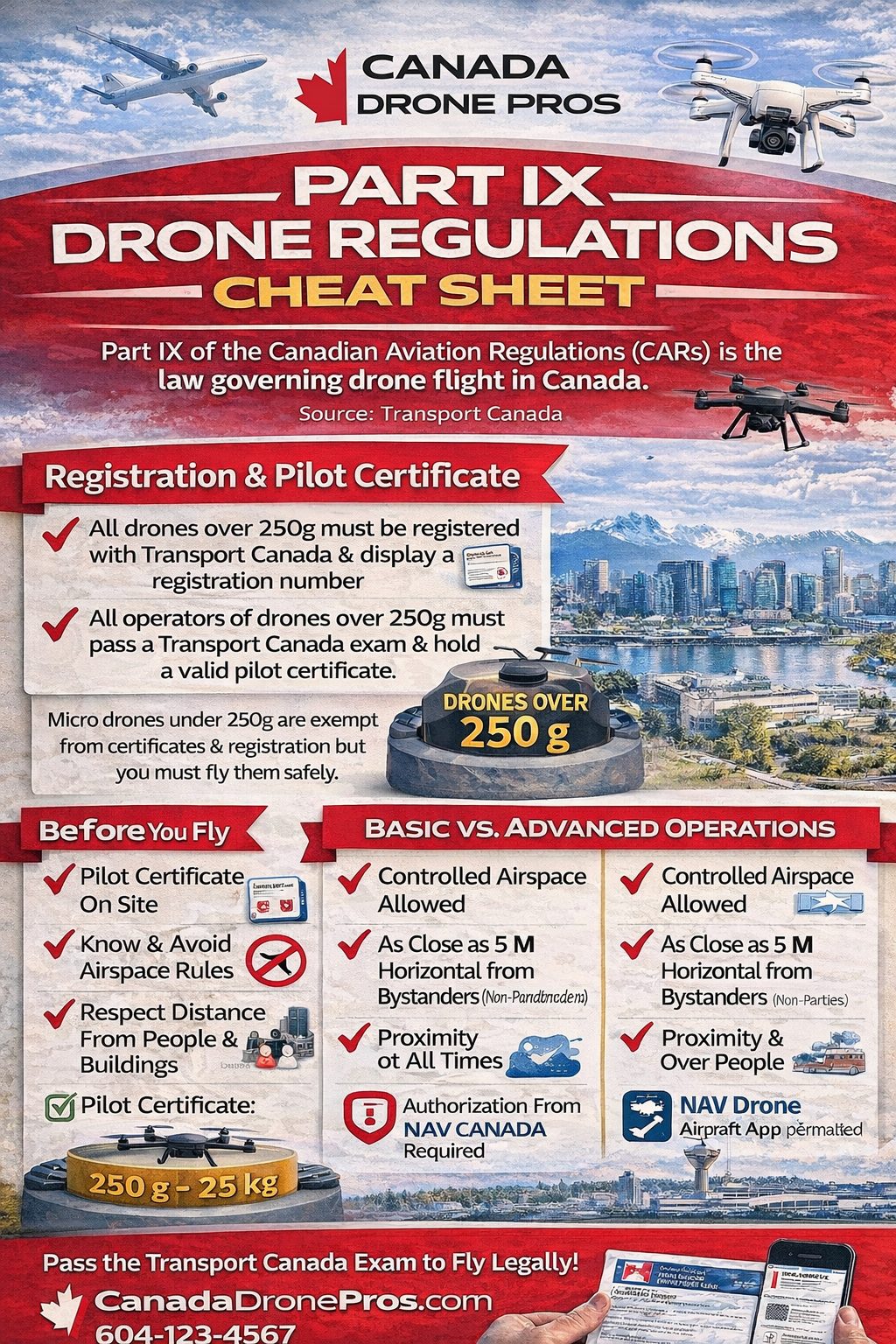
Canadian Aviation Regulations (CARs) Part IX Cheat Sheet
Canadian Aviation Regulations (CARs) Part IX Cheat Sheet