Best Budget Drones 2025 — The Ultimate Buyer’s Guide
Quick summary (If you only want the short version)
- Best overall budget drone pick (value + features): DJI Flip — excellent imaging, sub-249 g design, 3-axis gimbal, great for travel and creators.
- Best sub-250 g advanced pick: DJI Mini 4 Pro / Mini 5 Pro family — stronger obstacle sensing and proven DJI software ecosytem.
- Best non-DJI alternative: Autel EVO Nano+ — strong camera, solid option if DJI availability is an issue.
- Best ultra-budget / practice drone: Ryze Tello or Potensic / Holy Stone small quads — cheap, durable, and great to learn on
Below, we deep-dive into each recommendation, compare specs, and give a practical buying and accessories checklist so you can choose the right drone for your needs (travel, social video, mapping, or inspections).
How we define “budget drone” in 2025
“Budget” in this guide means drones designed for everyday content creators and hobbyists that price roughly between USD $250 and $800 (retail street prices, base kits). This range captures compact camera drones that deliver real photographic value or excellent learning platforms without the flagship price tag. We prioritize real-world value (camera, gimbal, flight safety, and build quality) over headline specs alone.
Why 2025 is a great year for budget drones
Manufacturers have pushed camera and stabilization tech down the price ladder: sub-250 g machines now commonly carry 1/1.3″ sensors, 4K/60 capture, and 3-axis gimbals. That means hobbyists and travel creators can get near-professional imagery without the pro price — and with many models kept just under regulatory weight thresholds to simplify flying for the casual user. Industry reviews and roundups in 2025 confirm this shift toward high-value mini drones.
Top Budget Drones of 2025 — Our Picks (Detailed)
Below are our top budget drone picks for 2025, grouped by purpose. Each entry includes the essential specs, pros & cons, and who should buy it.
1) DJI Flip — Best overall budget value (travel + creators)
Why we picked it: The Flip combines a modern 1/1.3″ sensor, 48MP stills, 4K/60 HDR video, a 3-axis gimbal, and an under-249 g design — something that used to be impossible at this price point. It’s travel-friendly, beginner-friendly, and capable of professional social content.
Key specs (summary)
- Sensor: 1/1.3″ CMOS
- Photos: 48MP, DNG RAW supported
- Video: 4K/60 HDR
- Gimbal: 3-axis mechanical
- Weight: <249 g (standard config)
- Flight time: ~31 minutes claimed (real world ~25–30 min)
- Notable: foldable full-coverage propeller guard for safer close work.
Pros
- Excellent image quality for the class
- Under-249 g simplifies many legal regimes
- Great battery life for a mini drone
- Foldable prop guard is fantastic for educational/training use
Cons
- Not as advanced in obstacle avoidance as higher-tier Minis in some conditions
- Ecosystem / app limitations if you prefer full professional toolchains
Best for: Travel vloggers, social content creators, first-time serious buyers, and students who want excellent image quality without registration hassle in many jurisdictions.
2) DJI Mini 4 Pro / Mini 5 Pro family — Best premium mini (close runner-ups)
Why we picked it: If you want the best safety/obstacle sensing in a sub-250 g / travel format, the DJI Mini 4/5 Pro family is proven. The firmware and obstacle avoidance ecosystem is mature and highly reliable for critical shoots. Recent updates in 2025 continued to refine safety behaviour.
Key specs (typical Mini 4 Pro-class)
- Sensor: Often 1/1.3″ (or larger in Mini 5 Pro)
- Video: 4K/60 HDR or higher depending on model
- Obstacle sensing: omnidirectional on some models
- Weight: <249 g (selected trims)
- Flight time: 30–40 minutes, depending on batteries and conditions
Pros
- Excellent obstacle sensors and flight reliability
- DJI Fly app and ecosystem are polished
- Great RAW photo support and low-light performance on newer models
Cons
- Price can sit at the high end of “budget” for the best trims
- DJI ecosystem lock-in (not a con for everyone, but worth noting)
Best for: Pilots who want travel portability without sacrificing advanced safety systems and who sometimes need to fly closer to subjects or in complex environments.
3) Autel EVO Nano+ — Best non-DJI alternative (camera-first)
Why we picked it: Autel’s Nano family offers a compelling camera profile and often avoids region-specific supply issues. The Nano+ historically provided strong color science and a capable camera in sub-250 g packages — making it a top pick for buyers who prefer a non-DJI option.
Key specs (Nano+ family example)
- Sensor: 1/1.28″ or 1/1.3″ depending on model
- Photos: high-MPP sensor with “color advantage” in some reviews
- Video: 4K/30–60 depending on config
- Weight: <249 g on many trims
Pros
- Non-DJI alternative — useful in regions with DJI restrictions or supply gaps
- Strong stills and color processing
- Typically robust hardware and third-party app compatibility
Cons
- Software polish may lag DJI in some models
- Slightly less integrated accessory ecosystem
Best for: Photographers who want a different color profile and buyers in regions where DJI availability is limited or where regulatory/legal issues push buyers away from DJI hardware.
Citation: Autel EVO Nano+ reviews and comparisons.
4) DJI Neo series — Best ultra-budget modern mini
Why we picked it: The Neo line is DJI’s attempt to serve the ultra budget drone market with sensible imaging and beginner features. The Neo (and Neo 2 variants) are usually the least expensive way into a gimballed, stabilized camera drone from DJI in 2025 and include many beginner-oriented safety features. DrDrone.ca
Key specs (typical Neo)
- Sensor: smaller than Flip/Mini but capable of 4K
- Gimbal: 3-axis mechanical (on some Neo variants)
- Weight: <249 g
Pros
- Lowest price among gimballed DJI models
- Beginner-friendly and lightweight
- Good for travel and social content
Cons
- Smaller sensor — less low-light performance
- Fewer pro features than Mini or Flip
Best for: New pilots and social content creators on a tight budget who still want a stabilized camera.
5) Honorary mentions — ultra-budget toys & specialty picks
- Ryze Tello (and clones): Best for indoor practice, kids, and learning basics. Not a content creator camera but great training.
- Potensic / Holy Stone Atom-class quads: Solid sub-$200 beginners’ drones with reasonable flight time — good for practice or backup craft.
- HoverAir X1 / SkyRover family: New entrants and smaller brands offering fun features like waterproof bodies or 360° capture; great if you want novelty rather than top image quality.
Head-to-Head: How to compare these budget drones (practical checklist)
When you compare models, pay attention to these real-world factors — not just headline megapixels:
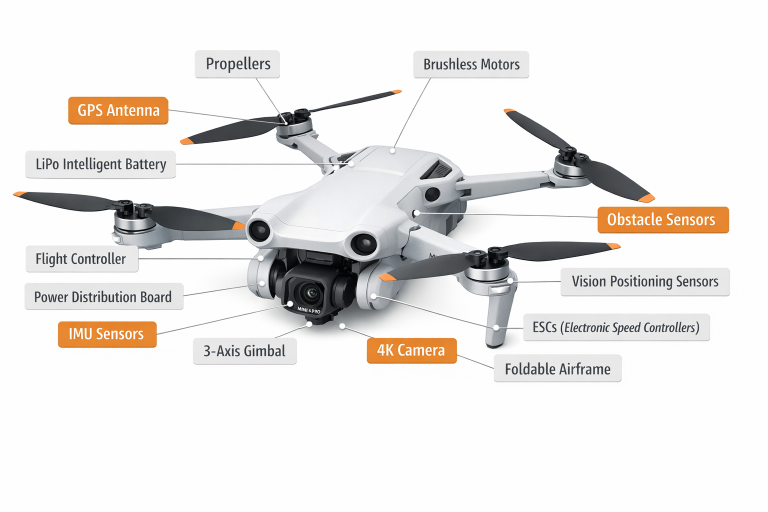
- Sensor size & RAW support — bigger sensor = better low light and dynamic range. RAW (DNG) matters for serious editing.
- Gimbal quality — 3-axis mechanical gimbals deliver usable, cinematic motion.
- Weight (regulatory effect) — under 250 g simplifies registration and often travel rules.
- Obstacle sensing / safety — omnidirectional vs forward/back/down — critical in complex environments.
- Flight time (real world) — advertised ≠ typical; expect 70–85% of nominal minutes in real conditions.
- Transmission & latency — affects range and livestreaming quality; 10–20 km claims are ideal conditions.
- Ecosystem & updates — firmware support, app stability, and accessory availability matter a lot after purchase.
- Spare parts & warranty — crash replacement and spare prop availability save money long term.
Best budget drone by use case — quick recommendations
- Best for travel & minimal paperwork: DJI Flip (sub-249 g, best imaging/weight combo).
- Best for serious photography on a budget: DJI Mini 4 Pro or Mini 5 Pro (obstacle avoidance + superior imaging).
- Best non-DJI camera alternative: Autel EVO Nano+.
- Best beginner practice drone: Ryze Tello or Potensic entry models.
- Best safety/education option: Flip with its propeller safety guard (great for training environments).
Accessories that make the biggest difference
No matter which budget drone you choose, these accessories will improve reliability and results:
- Extra batteries (2–3 total): Multiply real shooting time.
- ND filter kit (for your lens): Essential for smooth cinematic motion blur outdoors.
- Spare propellers & prop screws: Replace after any minor crash.
- Hard case or padded backpack: Protects the drone and batteries in travel.
- UHS-I V30 (or faster) microSD card: For reliable 4K recording.
- Multi-battery charging hub and portable power bank: Keeps you shooting away from mains.
- Insurance (commercial pilots): Required for professional jobs; recommended for serious hobbyists in Canada.
Legal & regulatory checklist for 2025 (short, essential)
Regulations differ by country; here are Canada-specific highlights and universal best practices for 2025 buyers:
- Weight matters: Many countries distinguish sub-250 g drones — often with simplified rules/registration exemptions. Always verify local law before travel. (DJI Flip / Mini class aim for <249 g).
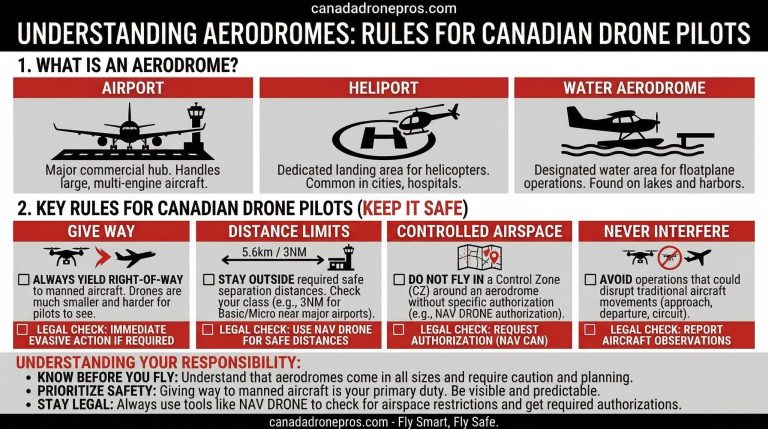
- Registration & pilot certificates: If your drone is 250 g–25 kg in Canada, you must register and hold the correct Transport Canada certificate (Basic or Advanced) for certain operations.
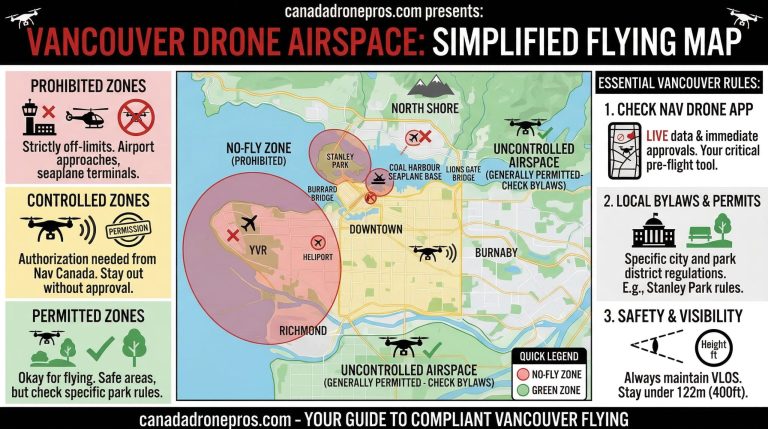
- Airspace & no-fly zones: Check NAV CANADA, local NOTAMs, and national park / municipal rules before launching.
- Privacy & wildlife: Never fly over people, near wildlife, or into restricted areas; treat consent and local bylaws seriously.
- Insurance: Required for many commercial jobs; recommended for valuable gear, even for hobbyists.
If you want an instant Canada-ready checklist formatted for printing, I can generate a downloadable PDF checklist you can hand to students or readers.
Real-world testing notes & tips (from Canada Drone Pros instructors)
- Warm batteries first: Cold reduces effective capacity. Keep spares close to body temperature.
- Use RTH altitude wisely: Set return altitude above local terrain (mountains, towers) to avoid collisions.
- Calibrate compasses at new locations: Magnetic variance and metal structures can confuse sensors.
- Practice emergency landings: Identify a safe spot near the takeoff area to practice a quick descent.
- Avoid aggressive tracking near obstacles: Some budget drones can be overconfident in tracking modes — pilot supervision is mandatory.
Common buyer mistakes (and how to avoid them)
- Buying for specs only: Don’t choose based on MP alone — sensor size, gimbal, and lens matter more.
- Skipping spare batteries: One battery seldom equals a day of shooting. Buy at least two spares.
- Ignoring firmware updates: Many early problems are fixed by firmware; update before first flight (but wait 24–48 hours on major releases if you need maximum reliability).
- Not checking local laws: Regulations change — check before you fly.
- Underestimating accessories: ND filters and spare props make huge practical differences.
Price guide & where to buy (2025 snapshot)
- DJI Flip: Base kits often cost around USD $399–$499, depending on region and bundles.
- DJI Mini 4 Pro / Mini 5 Pro: Typically at the upper end of the budget drone range, depending on trim (often $599+ for full combos).
- Autel EVO Nano+: Price varies $499–$699 depending on retailer and bundle.
- Neo / entry DJI models: Often the lowest price point for gimballed DJI drones.
Buy from authorized dealers where possible for warranty, firmware support, and local service.
Final verdict — how to pick the best budget drone for you
- If you travel a lot and want the simplest legal experience: go Flip — best balance of weight, imaging, and value
- If you need the most reliable obstacle avoidance while staying compact, choose Mini 4/5 Pro family.
- If you want a non-DJI camera profile or an alternate supply chain, consider Autel EVO Nano+.
- If you’re on an entry-level budget and learning the ropes: pick a Neo / Ryze / Potensic model and spend saved cash on batteries and filters.
All of the above budget drone models represent excellent value in 2025, but the “best” choice depends on your priorities: weight, camera quality, safety features, or absolute sticker price.